Why 60% of Backlinks Fail to Index: The "Tiered Indexing" Solution
A backlink Google has not indexed passes zero ranking value, and across monitored link profiles a large share never get indexed on their own. The fix is a tiered protocol: check every link first, index only the ones that failed, and use the free Google Indexing API for domains you own and a paid indexer for third-party links. Filtering first turns a $200 indexing bill into roughly $87 of net savings.
Building backlinks is expensive. But a backlink that isn't indexed by Google does not exist in the algorithm's eyes. It passes zero Link Juice.
In this guide, we debunk the "Ping & Pray" method and introduce the Tiered Verification Protocol used by top link-building agencies to ensure maximum ROI.
Figure 1: The "Indexing Gap" in modern SEO. Without intervention, 60% of your budget is wasted.
Does sharing a link on social media get it indexed?
Old-school advice says: "Share your link on Twitter/X to get it indexed."
The Reality: Googlebot is smart. It knows that a nofollow link from a social media feed is ephemeral. It rarely triggers a deep crawl of the target URL. Relying on this in 2026 is a waste of time.
Why do some backlinks never get indexed?
Google only indexes pages that offer value. A "Thin Content" profile page on a forum with 1 sentence has Low Indexability compared to a high-quality Guest Post.
Natural Indexing Probability
Profiles
Posts
Sites
| Link type | Natural indexing probability | Why |
|---|---|---|
| Forum profiles | ~20% | Thin, templated pages with little unique content and low crawl priority |
| Web 2.0 | ~45% | Free subdomains, often orphaned or duplicated across a network |
| Guest posts | ~85% | Editorial pages on established sites that Google crawls regularly |
| News sites | ~95% | High-authority domains with large crawl budgets and fast indexing |
How do you index backlinks without wasting budget?
Don't just throw links into an indexer blindly. Use a filtered approach to save money and increase safety.
The "IndexChecker" Workflow:
- Step 1 (Audit): Import your list of 1,000 backlinks into IndexChecker.
- Step 2 (Filter): We identify the ones that are already indexed - currently 46% across all IndexChecker checks in the last 30 days.
- Step 3 (Action): You export ONLY the non-indexed URLs.
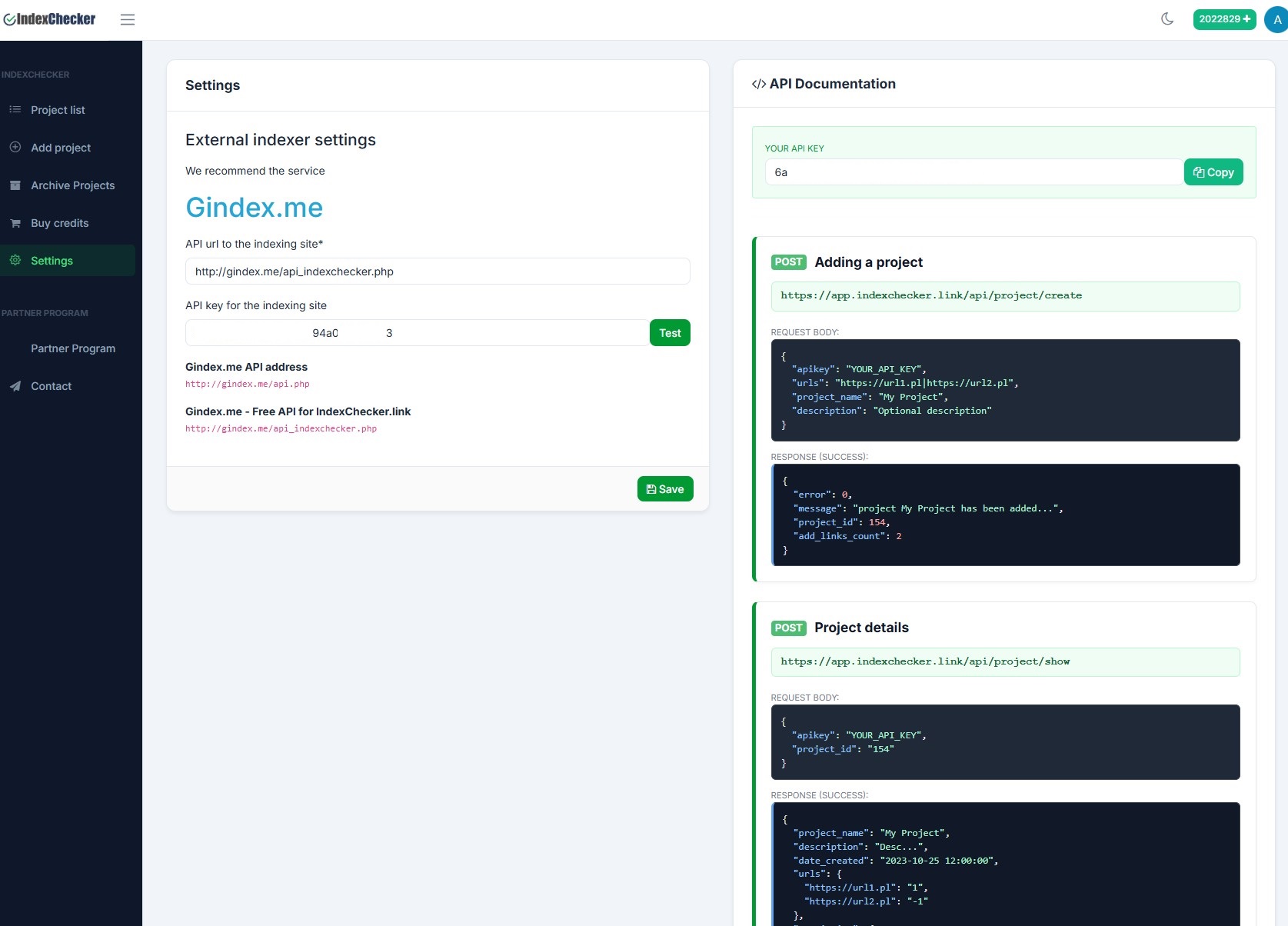
- Step 4 (Submit): Send only the problematic links to premium indexers (like Omega or SpeedLinks) directly from our dashboard API.
When should you use the Google Indexing API?
For links on domains you control (PBNs, secondary sites, programmatic SEO), nothing beats the Google Indexing API. It is free, instant, and official.
Limitation: You cannot use the Google API for links on sites you don't verify in Search Console (e.g., a NYTimes article about you). For those, you need 3rd party indexers.
// Decision Matrix: Which Tool to Use?
IF (Domain is Owned by You) {
Use: Google Indexing API (Free & Instant)
} ELSE {
Use: 3rd Party Indexer (Paid Service)
Action: Pre-filter with IndexChecker to save $$
}
| Scenario | Best tool | Why |
|---|---|---|
| Links on domains you own | Google Indexing API | Free, instant and official - for properties you verify in Search Console |
| Links on third-party sites | Connected third-party indexer | The Google API cannot submit URLs you do not own; pre-filter with IndexChecker first |
Frequently asked questions
Does sharing a backlink on social media get it indexed?
No. Googlebot treats an ephemeral nofollow link in a social feed as a weak signal and rarely triggers a deep crawl of the target URL. Pinging is unreliable as an indexing method.
Can I use the Google Indexing API for any backlink?
No. The Google Indexing API only accepts URLs on properties you have verified in Search Console. For links on third-party sites you do not own, you need a third-party indexer.
How much does checking first actually save?
You pay one credit per URL to check, then index only the links that failed. With a large share of links already indexed, most campaigns pay to index roughly half the list instead of all of it.
Google's own documentation on indexing and submitting URLs.
Key takeaways
Indexing is no longer automatic. It is a "Pay-to-Play" or "Optimize-to-Play" game. Stop guessing. Audit your backlinks first to separate the winners from the dead weight, then invest your budget only where necessary.